
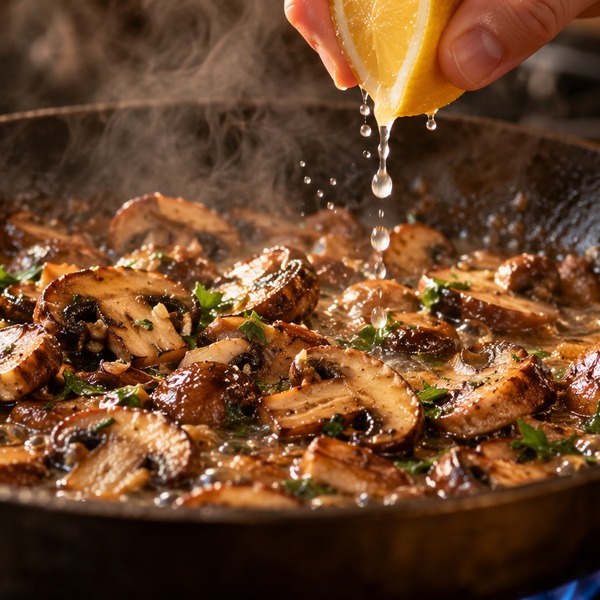
Ask a room of home cooks what to do when a dish tastes flat, and most hands go straight to the salt. An experienced chef will let you in on a secret: he reaches for the lemon.
Salt and acid do different work. Salt makes food taste more like itself. Acid makes you taste everything in it… the separate flavors stand up and introduce themselves. And fat, for all its pleasures, quietly mutes them. It coats the tongue, so by the third bite of a rich dish you’re tasting less than you did at the first. Acid cuts through that coating and resets your palate, bite after bite. It’s why the richest cooking of the season: the braises, the creams, the cheeses are usually finished with something bright.
The examples are everywhere in a French kitchen. A spoonful of sherry vinegar in French onion soup keeps the broth and Gruyère from turning heavy. Lentils, earthy and plain, come alive with vinegar stirred in at the table. Mushrooms want lemon. A pan sauce begins with wine in a hot pan. And a braise that has simmered all afternoon, dark and deep, wakes up completely with one small splash of vinegar at the end; including the cabbage and apples in one of our shared seasonal recipes, which ask for their cider vinegar last, never first.
Try the experiment once, because tasting it teaches more than reading it: serve yourself two small bowls of the same soup. Leave one as it is. Stir a teaspoon of lemon juice into the other. The second bowl won’t taste of lemon. It will taste of soup; clearer, warmer, more itself.
The rule is simple. Acid goes in at the end, off the heat, a little at a time, tasting as you go. If you can name the lemon, it was a touch too much. You’re not seasoning the dish. You’re turning on the light.
See you at the table.


